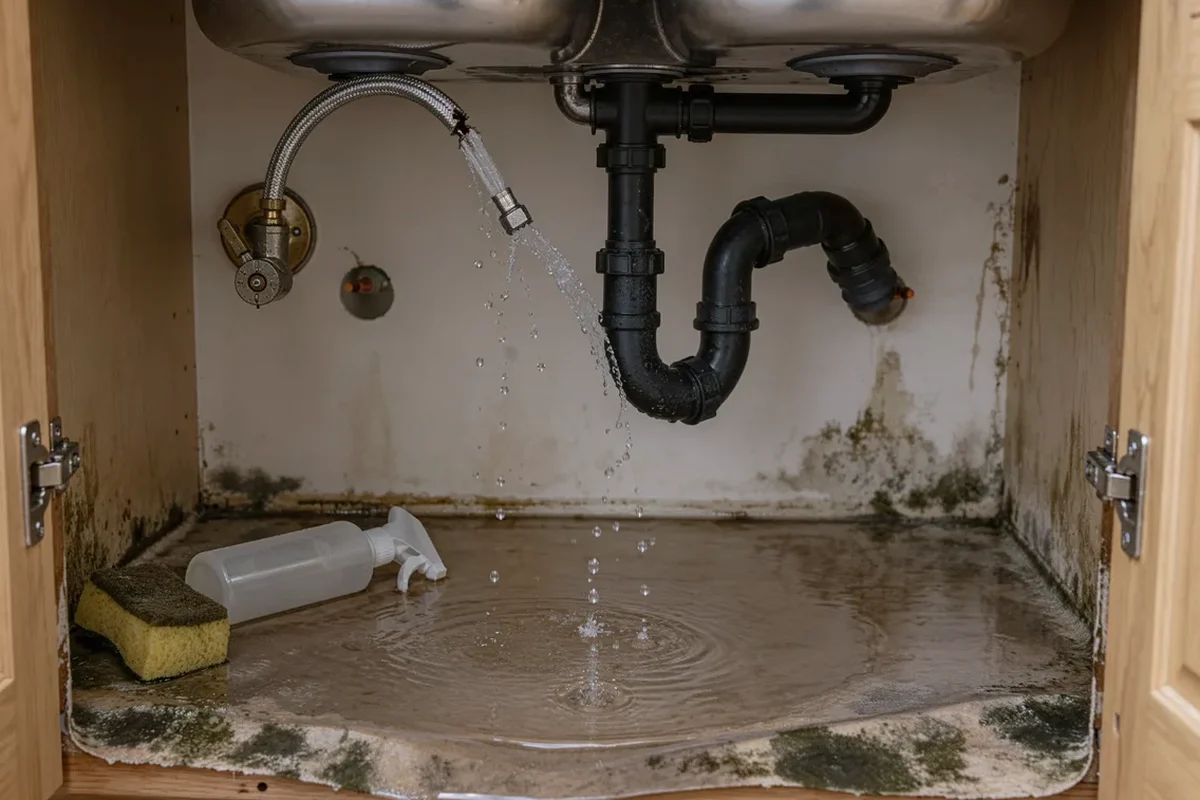
Water heaters, washer hoses and dishwasher lines usually leak slowly. A moisture meter can detect damp areas that never show on the surface. Call the number on this page to be connected with a local mold company in Wheaton.
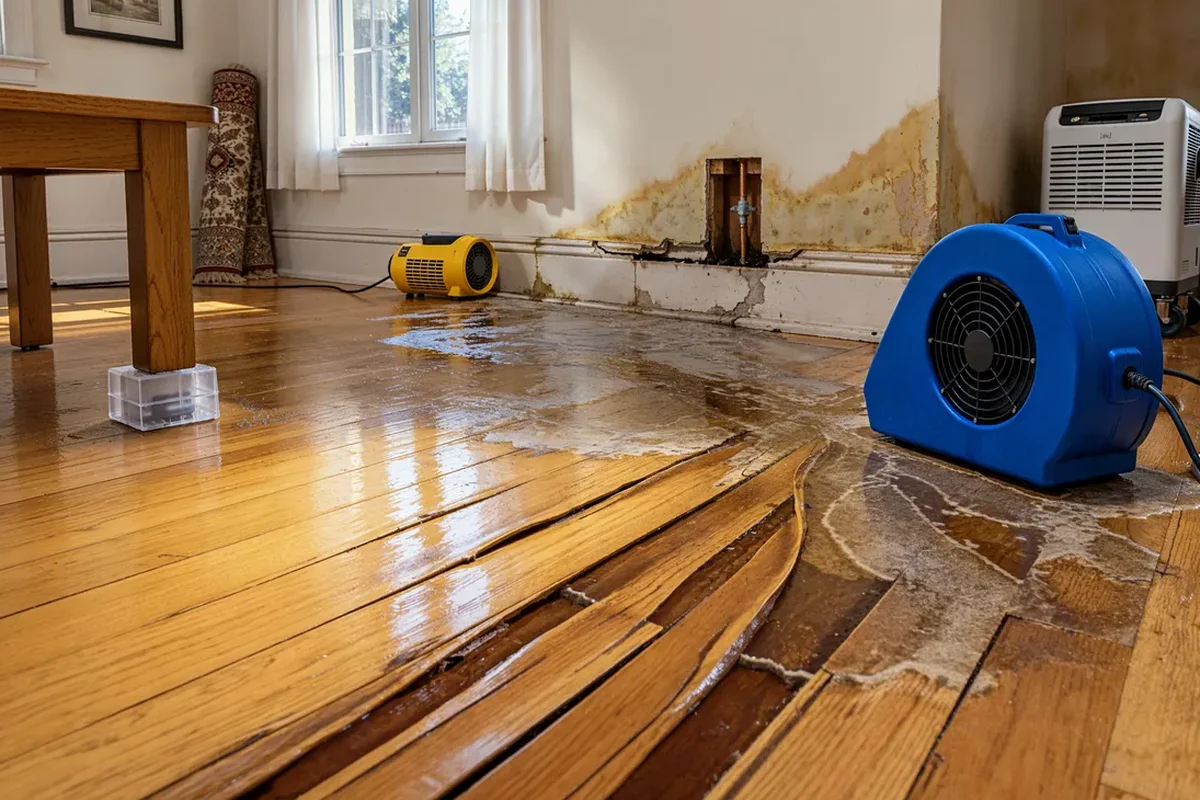
Do This Before You Call
If a leak seems ongoing, close the main shutoff first. Then photograph the damage with dates, list the rooms that feel clammy or smell wrong, and check beneath sinks and near the water heater. Those notes speed the visit and support any claim you decide to file.
Ice Dams and Spring Melt
Heavy snow and repeated freezing push meltwater beneath shingles and into attic insulation and upper ceilings. A leak that starts in January may only produce stains and odors by spring, after framing has stayed wet for months. Inspect eaves following every thaw. Clear gutters early too.
Older 1970s houses around Wheaton often route pipes through brick foundation walls and beneath aged floors, so a leak can go unseen for a long while before any stain appears overhead.
Tough Access Costs Hours
Crawl spaces, finished ceilings, plaster walls and tight stairwells all slow crews down. A house where the wet area is easy to reach takes less to dry and clean than one where workers must open several finished rooms just to get to it. Ask what access they expect.
Arrival Day Walk-Through
Expect questions about when the leak began and what repair was made, followed by a tour with a moisture meter and often a thermal camera. Crews trace the damp zone, check adjacent rooms, then explain what can be dried and what must be removed. Try to be home for it.
Roof and Gutter Care
Before the heavy rain season, clean the gutters, inspect flashing and have any flat roof checked. Ice dams and clogged drains drive water beneath roofing and into upper ceilings, and a modest roof repair costs much less than opening a ceiling afterward. Do it before autumn storms arrive.
Who handles what in Wheaton
Before signing, ask the remediation company for its IDPH mold remediation registration and a written scope that covers containment, removal and the final check. The Illinois Attorney General takes consumer complaints about home repair contractors.
Keep the inspection report, the scope of work and any clearance results together; buyers, landlords and insurers often ask for them later.
Rebuild work after the mold comes out, such as new drywall or framing, may need a permit; the City of Wheaton is where to ask for Wheaton addresses.
For flood zone questions after a heavy rain, FEMA's flood maps and your insurance agent can confirm the mapped zone for an address.
Companies that take calls here usually also work in Glen Ellyn, Winfield and Carol Stream.
Wheaton at a glance
Calls come in from across Wheaton, including around Downtown Wheaton, Roosevelt Road (Route 38), Butterfield Road (Route 56).
Wheaton participates in the National Flood Insurance Program, and parts of the city sit near DuPage County watercourses such as the West Branch DuPage River and Spring Brook.
Leak & Burst Pipe Mold Removal questions in Wheaton
What if the water came from the unit upstairs?
How soon can mold appear after a burst pipe?
What if a pipe froze and burst while I was away?
Does a leaking water heater call for mold work?
More mold services in Wheaton
Leak & Burst Pipe Mold Removal nearby
Helpful guides
Sources
- City of Wheaton Building Department
- Illinois Department of Public Health: mold remediation registration
- Illinois Department of Public Health: mold FAQs
- Illinois General Assembly: Home Repair and Remodeling Act
- EPA: A Brief Guide to Mold, Moisture and Your Home
- Wheaton housing by year built
- Wheaton: local background
Last updated: