Right after a storm, burst pipe or sewer backup, hours matter. EPA advises getting wet materials dry within 24 to 48 hours, and a local company can walk you through what drying and cleanup should include. Call the number on this page to be connected with a local mold company in Des Plaines.
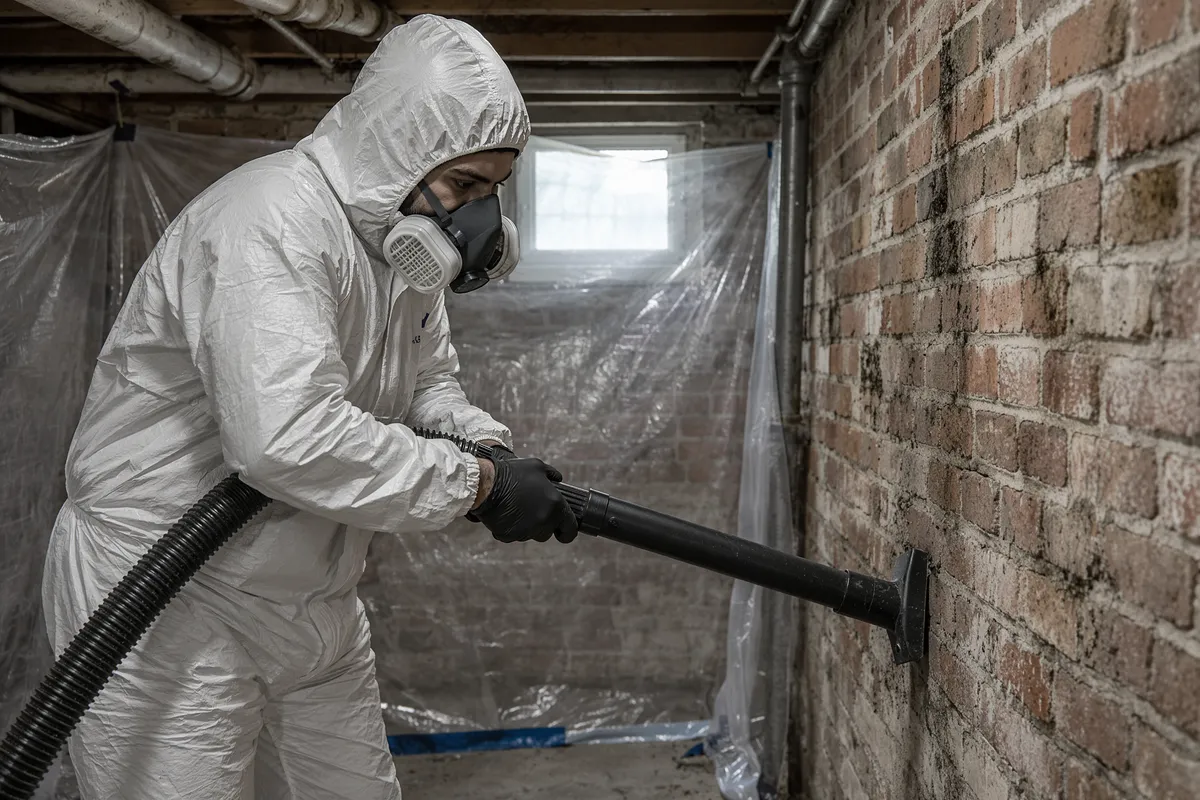
Mold services in Des Plaines
The usual path of a mold problem
A stain or odor appears. Someone traces the water. An assessor records the damage, a remediator does the work, materials dry and a final check confirms it. Because local firms cover every stage of that path, one call makes sense whichever step you are at.
Furnace season moisture
Once the heat comes on, warm indoor air reaches cold walls, windows and roof sheathing and drops its water. Tight windows and steamy showers add to it. EPA advises indoor humidity under about 60 percent, and ideally 30 to 50. Dry winter air indoors is common, but cold surfaces still sweat.
Near the water, Des Plaines homes absorb added humidity and runoff in heavy weather. Mold often begins in basements, low rooms and along foundation walls that take on seepage.
What happens when you dial
- Call the number on this page
- Explain what you see and where
- Reach an independent local mold company
- Hear how it works and charges
Whether to hire anyone stays your decision. Expect an introduction lasting a few minutes. Most callers say it was easier than they expected.
A written scope should name
- Rooms and materials covered
- How the space is sealed and dried
- Whether furnace or ducts are included
- What becomes of wet drywall, insulation and flooring
- The way completion will be checked
When bids diverge, the scope is usually the reason. Ask each firm to cover every line.
Useful local contacts for Des Plaines
Illinois asks mold remediation companies to register with the Illinois Department of Public Health under the Mold Remediation Registration Act. Ask for that registration before cleanup starts; IDPH does not license people who only do mold assessments or testing.
Keep the inspection report, the scope of work and any clearance results together; buyers, landlords and insurers often ask for them later.
Rebuild work after the mold comes out, such as new drywall or framing, may need a permit; the City of Des Plaines is where to ask for Des Plaines addresses.
For flood zone questions after a heavy rain, FEMA's flood maps and your insurance agent can confirm the mapped zone for an address.
Nearby, the same kind of help is available in Mount Prospect, Park Ridge and Prospect Heights.
Staying home during the job
Many families remain in the house, because the work area is sealed from living space. Expect fan noise, demolition sounds and a few rooms closed for a while. Anyone with health concerns should talk with their doctor about whether to stay elsewhere.
After water, the clock runs
A storm, burst pipe, sewer backup or failed appliance starts a countdown. Drywall, insulation and flooring left wet are where mold usually begins, and EPA advises drying within 24 to 48 hours. If that window has closed, call anyway and give the date the water came in.
Common questions in Des Plaines
What should I do after a flood, storm or sewer backup?
What indoor humidity is best?
Will homeowners insurance pay for mold?
Is a permit required for mold repairs in Des Plaines?
Nearby cities and towns
Sources
Last updated: