Illinois remediation firms register with the state health department, which also says mold covering more than about 10 square feet should go to a professional remediator. Ask any company about registration and training. Call the number on this page to be connected with a local mold company in Prospect Heights.
Mold services in Prospect Heights
What people usually call about
- Inspection and moisture mapping
- Air and surface sampling
- Removal and cleanup
- Furnace, coil and duct growth
- Attic sheathing and insulation
- Storm, sewer and burst-pipe damage
- Verification once work ends
Name the closest fit when you phone. A short description is plenty.
Basements lead the list
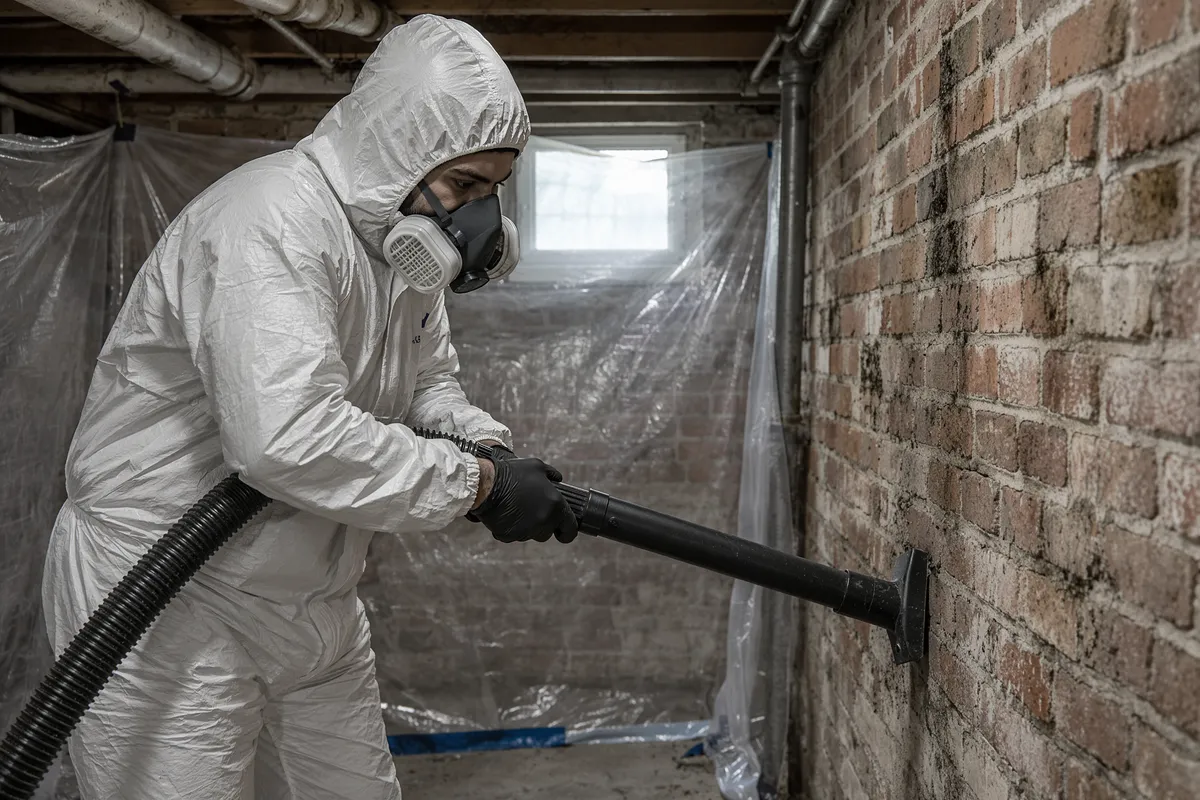
Brick and block foundation walls in older bungalows and post-war ranches pass moisture, and a stalled sump pump or a floor drain that surges during a cloudburst makes things worse. Cardboard, carpet and wood paneling kept below grade supply the food. A hygrometer shows whether the basement stays humid.
Near the water, Prospect Heights homes absorb added humidity and runoff in heavy weather. Mold often begins in basements, low rooms and along foundation walls that take on seepage.
Useful local contacts for Prospect Heights
The Illinois Department of Public Health says a clean-up plan that doesn't deal with the underlying moisture problem will fail, and it doesn't recommend testing when you can already see or smell mold.
Some owners hire one independent company for the inspection and clearance check and a different company for the cleanup, so the business judging the result isn't the one that did the work.
Rebuild work after the mold comes out, such as new drywall or framing, may need a permit; the City of Prospect Heights is where to ask for Prospect Heights addresses.
If river, creek or storm water got inside, FEMA's flood map service and your insurer can tell you how the address is zoned.
Calls from Prospect Heights are often matched with companies that also cover Mount Prospect, Wheeling and Arlington Heights.
Helpful things to mention
The call goes quicker if you describe what you see or smell, which room it is in, whether a leak or storm came first, whether the furnace or AC seems involved and whether you own or rent. Photos can wait. Everyday words work fine; trade jargon is unnecessary.
More than the bottom line
Bids differ because jobs differ. Put scope, drying plan, warranty language and closing check next to each other rather than reading the total alone. A lower figure that omits drying, sealing or verification may cost more once walls have to be reopened. Ask for each bid in writing.
Duration of a typical job
A small contained cleanup can wrap up in a day or two. Basements, attics and duct systems run longer, and drying stretches the schedule further. Request a written timeline and ask what might change it, for example damage discovered behind a wall. Ask for a calendar of the main steps.
A job for you, perhaps
A small surface spot, like growth on a grout line or sill, may be yours to clean. EPA says homeowners can usually manage areas under about 10 square feet, and it does not generally recommend bleach for routine cleanup. Repair the moisture, or the spot returns.
Common questions in Prospect Heights
What leads to mold in Chicago-area homes?
Does a musty odor prove mold is present?
Do I need testing or only an inspection?
Will bleach get rid of mold?
Nearby cities and towns
Sources
Last updated: