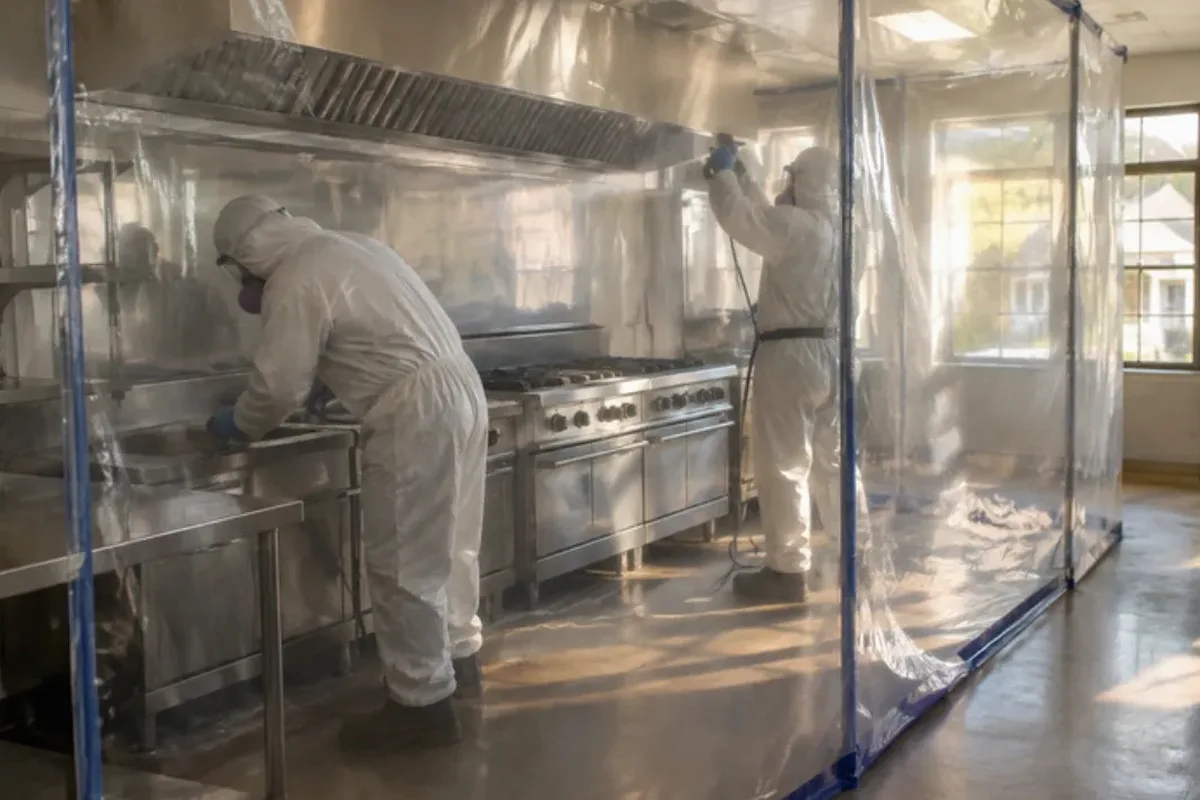
Large buildings add shared air handlers, lease clauses and more than one responsible party. A local company can confine the job to the affected zone while the rest of the property carries on. Call the number on this page to be connected with a local mold company in Arlington Heights.
Small signs worth acting on
- A smell with no visible source usually has one close by.
- Ringed, discolored tiles often sit under a leak.
- Growth behind vinyl wall covering stays out of sight.
- Carpet that stays damp points to a wet slab or pipe.
Each one means moisture, which seldom stays put.
Cold surfaces and warm air
Winter pushes humid air from kitchens, showers and crowded rooms against cold exterior walls, windows and roof decks, where droplets form. Uninsulated metal roofs on warehouses and gyms drip the same way, soaking insulation and the stock underneath. Metal decks and skylight curbs are classic spots for this.
Construction from the 1970s is widespread in Arlington Heights, and renovations there often uncover old leaks behind finishes, so take moisture readings before new work closes the walls.

Permits and license checks in Arlington Heights
Illinois' Home Repair and Remodeling Act calls for a written contract or work order on jobs over $1,000, listing the contractor's business name and address and the total cost, with parts and materials described.
Keep the inspection report, the scope of work and any clearance results together; buyers, landlords and insurers often ask for them later.
Remediation itself is cleanup, but putting the room back together can be permitted work; ask the contractor whether the Village of Arlington Heights needs to be involved.
Water that came in from outside raises insurance questions; FEMA's flood map search shows whether the property sits in a mapped flood zone.
Calls from Arlington Heights are often matched with companies that also cover Rolling Meadows, Mount Prospect and Prospect Heights.
Items that raise or lower the figure
- Square feet of material involved
- Whether staff and customers remain inside
- Evening or weekend labor
- Access above ceilings and behind fixtures
- Drying equipment needs
Ask each firm which items it counted, so the bids can be set side by side. Written quotes from two or three companies make the difference obvious.
Safeguarding inventory and records
Before demolition the crew should move or cover stock, files, computers and display fixtures close to the work. Anything that cannot be cleaned may need replacement. List and photograph items beforehand, which assists insurance claims and the later rebuild. A short written inventory is enough.
After the crew leaves
A cleanup lasts only if the moisture source stays repaired. Confirm the roof, pipe or air handler fix is finished, then watch the area for several weeks for new stains. If an odor returns, contact the company and the assessor right away. A calendar reminder keeps it from slipping.
Arlington Heights at a glance
Calls come in from across Arlington Heights, including around Arlington Heights Road, Northwest Highway (U.S. Route 14), Rand Road.
Lake Arlington is a human-made detention lake, part of how the village manages stormwater.
Commercial Mold Remediation questions in Arlington Heights
What does a closing check involve?
Who pays when a tenant reports mold?
How soon should wet materials be dried?
Does commercial mold work need a permit?
More mold services in Arlington Heights
Commercial Mold Remediation nearby
Helpful guides
Sources
- Village of Arlington Heights Building & Life Safety Department
- Illinois Department of Public Health: mold remediation registration
- Illinois Department of Public Health: mold FAQs
- Illinois General Assembly: Home Repair and Remodeling Act
- EPA: A Brief Guide to Mold, Moisture and Your Home
- Arlington Heights housing by year built
- Arlington Heights: local background
Last updated: