Illinois remediation firms register with the state health department, which also says mold covering more than about 10 square feet should go to a professional remediator. Ask any company about registration and training. Call the number on this page to be connected with a local mold company in Lombard.
Mold services in Lombard
Handle it yourself, or not
A thin film of surface growth is frequently an owner's job. EPA draws the line near 10 square feet, with the moisture repaired first. Growth inside a wall or ceiling, or left behind by flood or sewage water, generally belongs with trained crews. A brief call helps you judge.
Air conditioning and ducts
Cooling equipment wrings water from the air, and a plugged drain or sweating duct sends it somewhere unintended. Since furnaces and air handlers often sit in basements or attics, slow leaks go unseen. A musty odor from the registers deserves a call. Cleaning the condensate line each season is a simple habit.
Permits and license checks in Lombard
To register with the Illinois Department of Public Health, a mold remediation provider has to show third-party certification and financial responsibility. A business that only inspects or tests for mold doesn't need that registration.
Some owners hire one independent company for the inspection and clearance check and a different company for the cleanup, so the business judging the result isn't the one that did the work.
Rebuild work after the mold comes out, such as new drywall or framing, may need a permit; the Village of Lombard is where to ask for Lombard addresses.
If river, creek or storm water got inside, FEMA's flood map service and your insurer can tell you how the address is zoned.
Companies that take calls here usually also work in Villa Park, Glen Ellyn and Elmhurst.
Uncertain callers are welcome
You need not know the correct term or be sure it is mold. A stale odor, a stain that keeps coming back or a damp wall is reason enough. Whoever answers can tell you whether it sounds like a job for an inspection, a crew or just home upkeep.
A written scope should name
- Rooms and materials covered
- How the space is sealed and dried
- Whether furnace or ducts are included
- What becomes of wet drywall, insulation and flooring
- The way completion will be checked
When bids diverge, the scope is usually the reason. Ask each firm to cover every line.
Safeguards around the work area
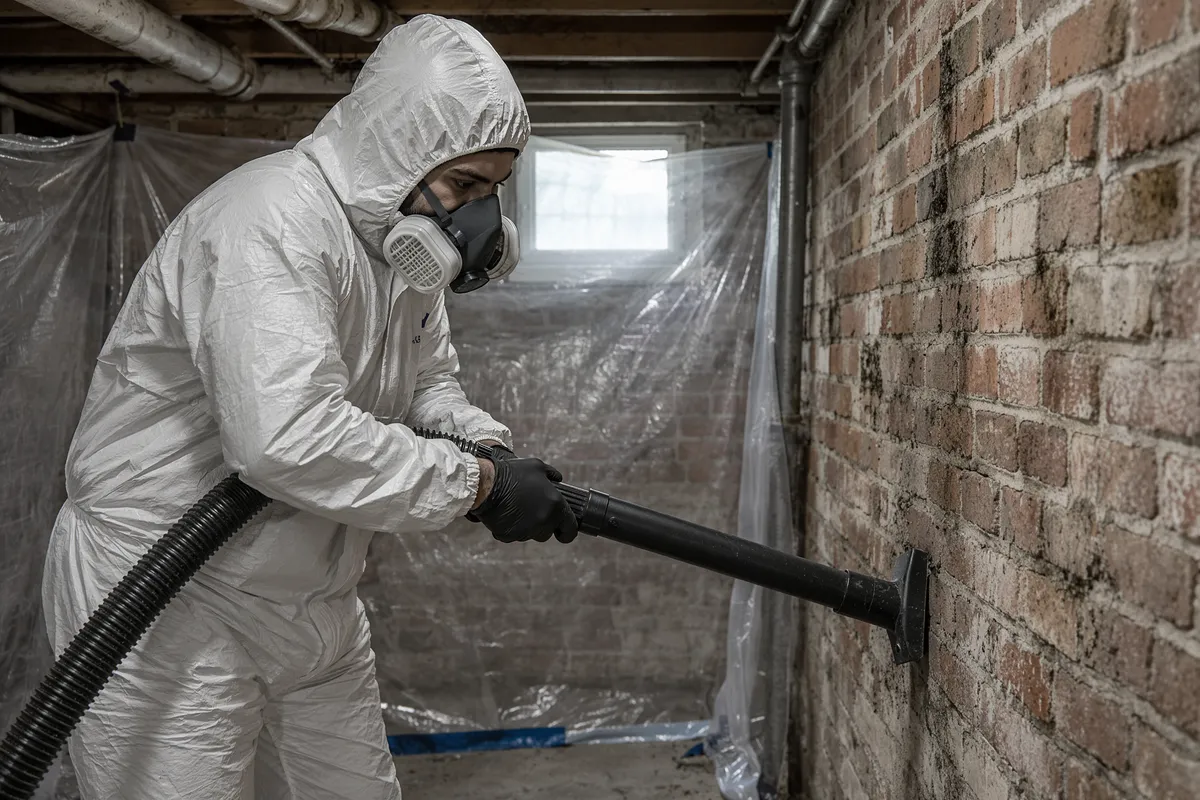
- Poly sheeting walls off the room
- A HEPA-filtered fan pulls air outward
- Debris is bagged inside the zone
- Surfaces get cleaned and dried last
Ask the company to narrate its own steps so nothing surprises you. Ask which steps apply to your property.
Smell without a source
An odor with nothing visible often means moisture inside a wall, beneath flooring or within ducts. Finding it is what an assessor with a moisture meter and thermal camera does best. An inspection first beats cutting into drywall blindly. A scan of the wall can save a lot of repair work.
Common questions in Lombard
Do I need testing or only an inspection?
What should I do after a flood, storm or sewer backup?
What indoor humidity is best?
What is a clearance check?
Nearby cities and towns
Sources
Last updated: