Whether it is a single storeroom or a whole apartment stairwell, the first moves match: stop the water, write down what you see and ask a company to size the job before anything is torn out. Call the number on this page to be connected with a local mold company in Evanston.
Where DIY stops
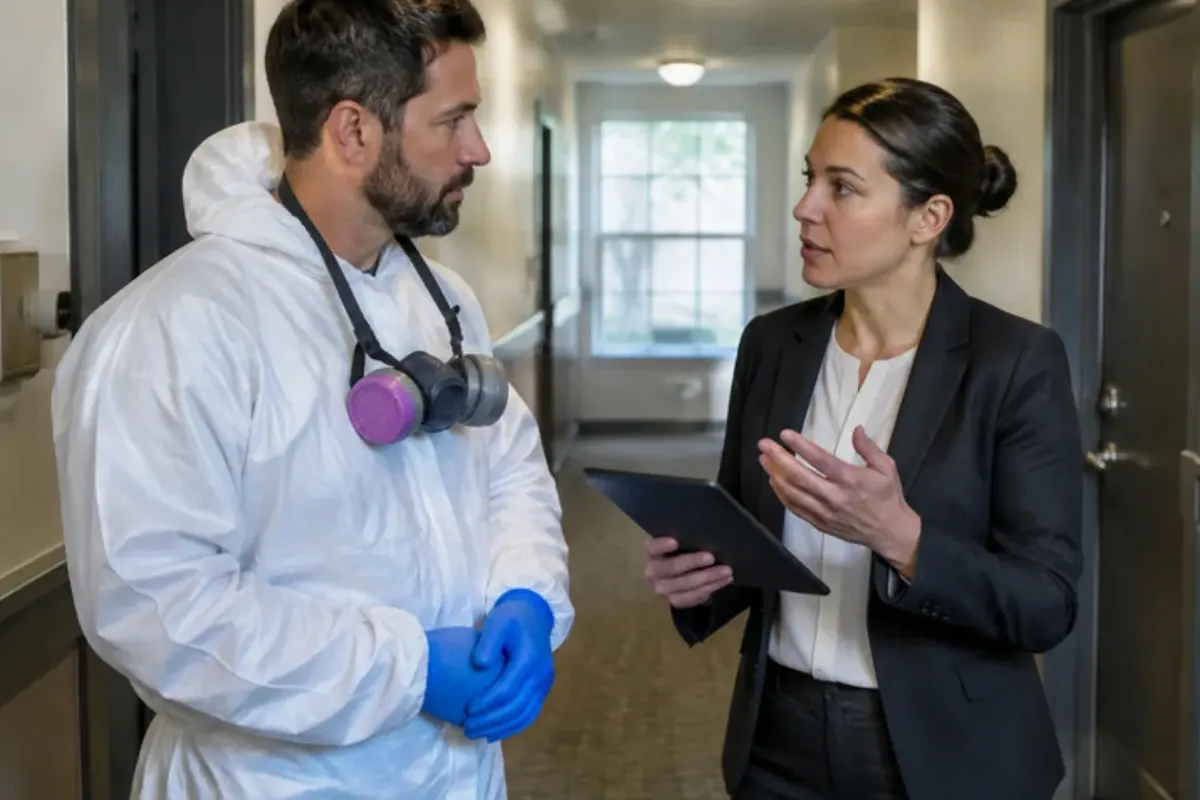
EPA notes that a homeowner can usually clean a patch under about 10 square feet, and that same rule of thumb fits a break room. Beyond that, or when growth is on porous materials or inside a wall, bring in a commercial company with training for it.
Roofs and drains shared by neighbors
Strip centers, storefront rows and courtyard apartment buildings near Wilmette, Kenilworth and Skokie often share a roof, a drain line or an air handler. That blurs where water started and who is responsible. Moisture mapping that follows the water instead of the lease lines settles it.
Construction from the 1950s is widespread in Evanston, and renovations there often uncover old leaks behind finishes, so take moisture readings before new work closes the walls.
Close to open water or the lakeshore, businesses in Evanston see more humidity and storm runoff, so roof drains, ground-level walls and storage rooms need regular attention.
Line items people forget
An assessor's plan and the closing check usually come from someone other than the remediator, and the leak repair is a third expense. Managers who budget for removal alone get surprised. Ask for each piece to be named and priced separately instead of rolled into one total.
Permits and license checks in Evanston
IDPH advises that mold growth larger than about 10 square feet be cleaned up by a professional remediator. Remediation providers in Illinois register with IDPH, so that registration is the first thing to confirm.
Ask whether the company that removes the mold will also test its own work. Many owners prefer an independent assessor for clearance.
Remediation itself is cleanup, but putting the room back together can be permitted work; ask the contractor whether the City of Evanston needs to be involved.
If river, creek or storm water got inside, FEMA's flood map service and your insurer can tell you how the address is zoned.
Companies that take calls here usually also work in Wilmette, Kenilworth and Skokie.
Paper trail to expect
| Document | Written by |
|---|---|
| Assessment and plan | An assessor |
| Work order | Remediation company |
| Closing report | Independent assessor |
Store all three with the building files, since buyers and insurers may ask years on. A short call to each party confirms who is writing what.
Before a lease, sale or review
Buyers, lenders and incoming tenants often ask about water history. A passed closing check and a tidy report answer much of that. With a deadline coming, call early, since drying, removal and verification each take time and should not be rushed.
Evanston at a glance
Calls come in from across Evanston, including around Downtown Evanston (Davis Street), Central Street, Dempster Street.
Most of Evanston's homes were built before 1980, so older basements and foundations are common.
Commercial Mold Remediation questions in Evanston
How is commercial mold work different from a house job?
Does the assessor do the cleanup too?
What humidity should a business aim for?
Are low-lying or waterfront businesses more exposed?
More mold services in Evanston
Commercial Mold Remediation nearby
Helpful guides
Sources
Last updated: