Whether it is a single storeroom or a whole apartment stairwell, the first moves match: stop the water, write down what you see and ask a company to size the job before anything is torn out. Call the number on this page to be connected with a local mold company in Elmhurst.

Ground-floor shops beneath apartments
Two-flats and older mixed-use blocks often put a store below living space, sharing pipes, walls and a roof. A drip upstairs can appear as a stain over the counter downstairs, so tracing water may take a walk through more than one unit. Ask the property manager or the shop below which unit sees the water first.
Below-grade storage and mechanical rooms
Many older commercial and mixed-use buildings here keep stock or equipment in a basement. Seepage through brick or block, a stalled sump or a floor drain that backs up in a cloudburst keeps things damp, and growth tends to start behind boxes left alone for weeks.
Close to open water or the lakeshore, businesses in Elmhurst see more humidity and storm runoff, so roof drains, ground-level walls and storage rooms need regular attention.
Scheduled work versus a scramble
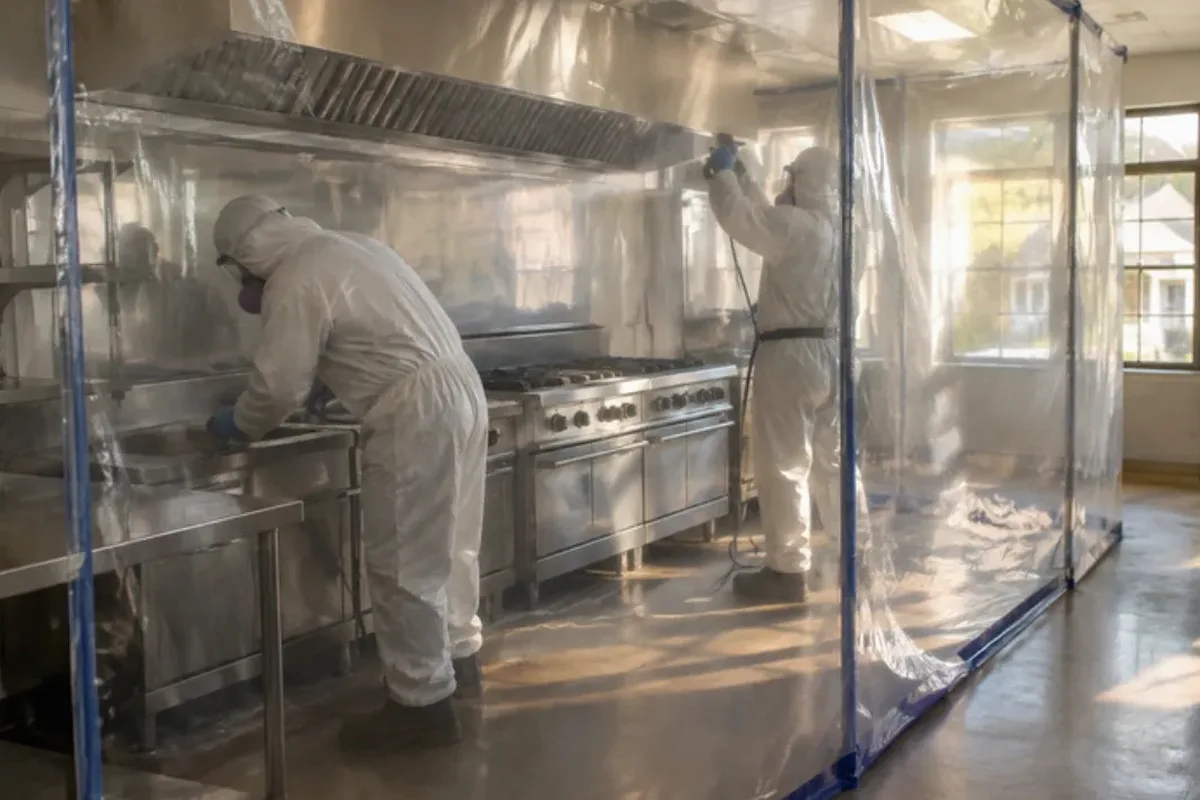
A planned project lets companies line up crews and equipment sensibly. A rush job after a flood or a failed inspection costs more to mobilize and leaves less time to scope carefully. Stop the water first if you can, then give yourself a day to compare.
Telling other occupants
In multi-tenant buildings, a brief notice explaining what is happening, when and what neighbors might notice helps a lot. Managers who share the schedule and the final results in writing generally get fewer complaints and a smoother project. A one-page notice taped near the entrance works for most buildings.
A tour after rough weather
A quick look at roof drains, ceiling corners, basement floors and window sills following heavy rain or a hard freeze catches problems early. Keep a short checklist, and ask the person who opens up each morning to report any new smell or stain that day.
Permits and license checks in Elmhurst
IDPH advises that mold growth larger than about 10 square feet be cleaned up by a professional remediator. Remediation providers in Illinois register with IDPH, so that registration is the first thing to confirm.
Ask whether the company that removes the mold will also test its own work. Many owners prefer an independent assessor for clearance.
Remediation itself is cleanup, but putting the room back together can be permitted work; ask the contractor whether the City of Elmhurst needs to be involved.
If river, creek or storm water got inside, FEMA's flood map service and your insurer can tell you how the address is zoned.
Companies that take calls here usually also work in Berkeley, Villa Park and Hillside.
Commercial Mold Remediation questions in Elmhurst
How is commercial mold work different from a house job?
Which records should a manager hold on to?
Does commercial mold work need a permit?
Are low-lying or waterfront businesses more exposed?
More mold services in Elmhurst
Commercial Mold Remediation nearby
Helpful guides
Sources
Last updated: